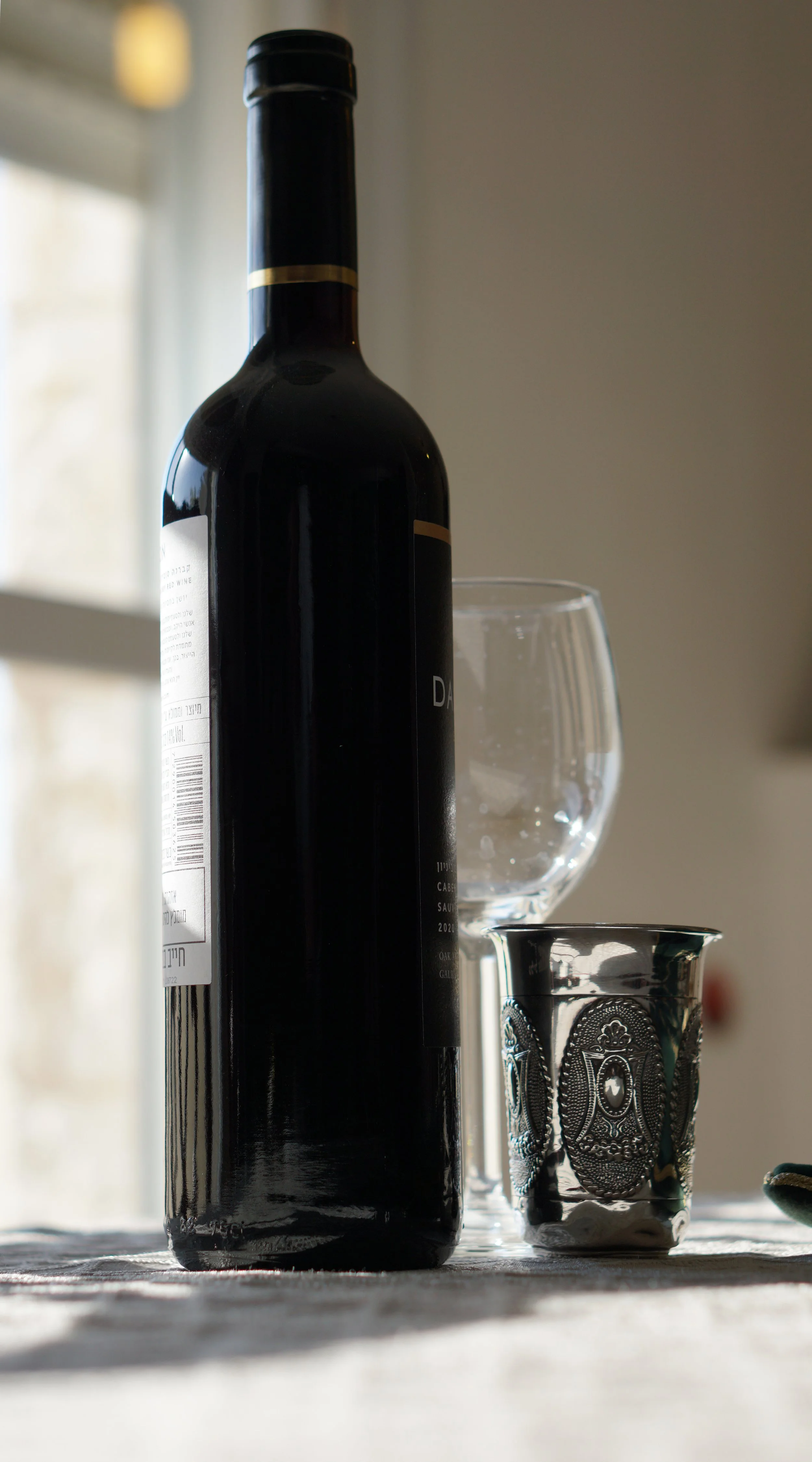
Kosher wine is made just like other table wine, with an extra set of rules to make it consistent with Jewish dietary law. In order for a wine to be deemed kosher (Yiddish for “proper” or “fit”), it must…
- Be made under the supervision of a rabbi
- Contain only kosher ingredients such as the yeast and the fining agents
- Made with equipment that has been certified by a rabbi to make kosher wines
- Be free of preservatives or artificial colors
- Be handled from start to finish by Sabbath-observant Jews
- Producers of Concord-based wines (such as Manischewitz) that are sweetened with corn syrup must produce special “kosher for Passover” bottlings which are labeled as such
- Some kosher wines are heated as part of the production process. These wines are known as ‘mevushal’ which literally means the wine was ‘cooked’
- Kosher wines will have certification symbols. One of the most common looks like a ‘U’ in a circle Ⓤ, suggesting that it’s certified by Union of Orthodox Rabbis. A ‘K’ in a circle Ⓚ indicates it’s kosher, a ‘K’ in a circle with a ‘P’ Ⓚ-P is kosher for Passover, a ‘K’ in a star, cRc and Hebrew ‘רכש ’ are also indicators that the wine is kosher. So, in summary, kosher wines don’t necessarily taste any different from non-kosher wines, or have higher or lower quality; they simply must be produced in accordance with a set of Jewish dietary laws.
L’Chaim! Cheers!