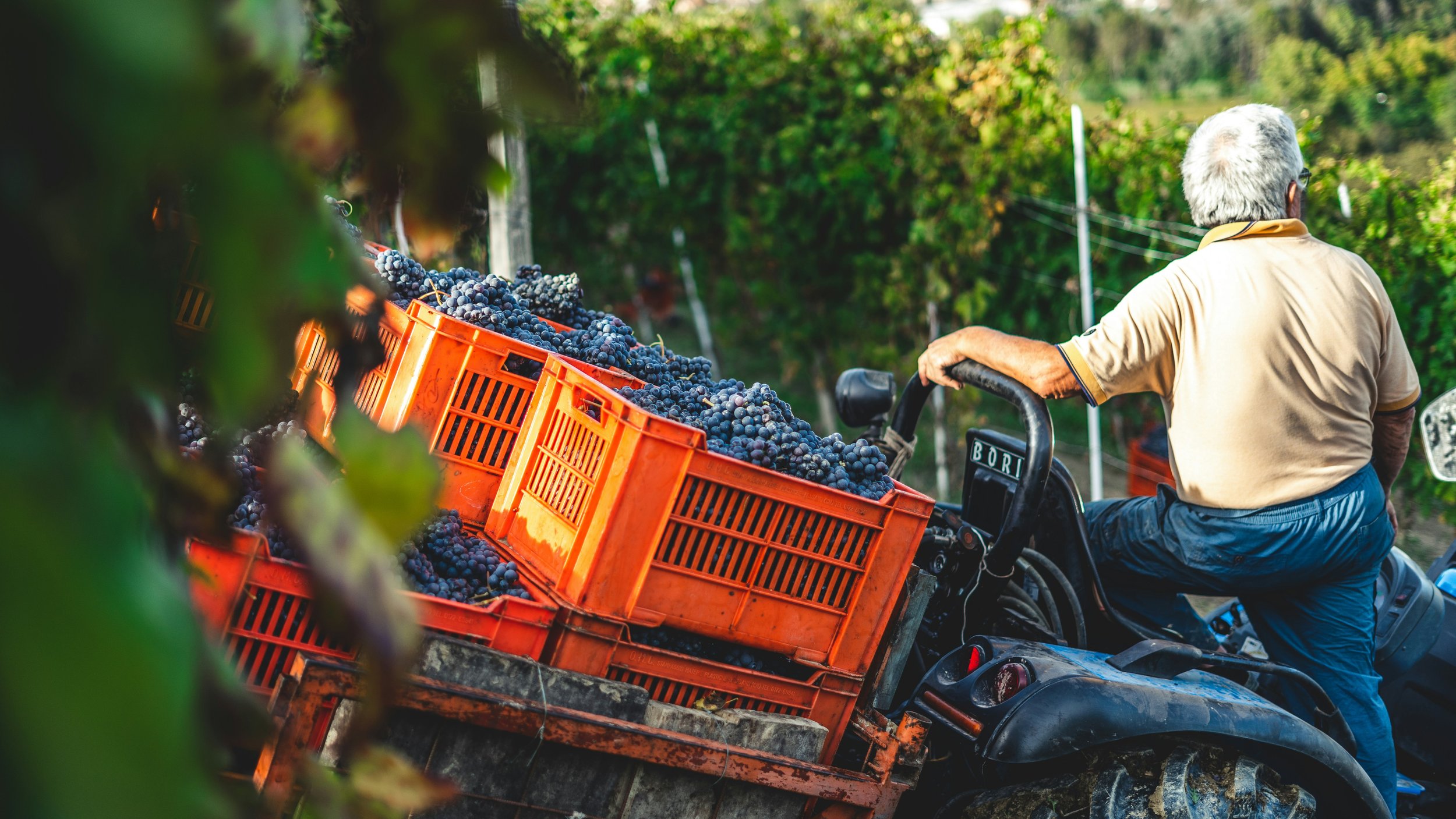
Photo by Andrea Cairone on Unsplash *
While there is a lot of science and chemistry involved in winemaking, it is also considered an art. This is because wine making involves creativity, intuition, and personal expression.
Here are just some the artistic factors that go into wine making:
- Determining which grapes will grow best in the area (i.e., terroir)
- Knowing how to prune mature grapevines while they are dormant
- Knowing how to prune the vines during the growth period to create the proper canopy to give the grapes just right amount of sun and shade
- Deciding when to remove bunches of grapes from vines before they ripen to further the concentration of flavor in the remaining grapes
- Choosing the “right” time to harvest the grapes (e.g., sugar levels, acidity, skin color)
- Choosing to de-stem the grapes or leave them as whole clusters for fermentation
- Deciding how to press the grapes (manual crushing, basket pressing, roller crushing)
- Choosing whether to let them macerate (i.e., soaking the crushed grapes (skin, seeds, stems) in their juice
- Picking the “right” yeast (wild vs cultivated)
- Choosing the vessel for fermentation and aging (e.g., stainless steel vs oak)
- Controlling fermentation to the “right” temperature
- Determining how long to let fermentation go
- Deciding to allow the wine to undergo Malolactic conversion or not
- How and when to do punch downs and pump overs
- Allowing a wine to age on-lees (i.e., the dead yeast cells)
- Knowing when to top off barrels so as to minimize the wine’s exposure to oxygen
- Choosing to filter and/or fine the wine and which technique to use
- Making decisions on blending (different vineyards, different grapes)
- Choice of oak barrels for aging (French vs US, new vs used, degree of toasting of the inner barrels)
- Use of other aging vessels (e.g., Stainless Steel, concrete, clay amphora)
- Determining how long to age the wine
- Having a finely tuned palate and nose to evaluate the wines evolution
- Choosing the right bottle-type
- Choosing the bottle’s label to best express the wine, the wine maker and the winery So, while science provides the foundation for wine making, it’s the many artistic decisions that make each bottle unique. We’ll look further in to each of these in future blogs. Cheers!