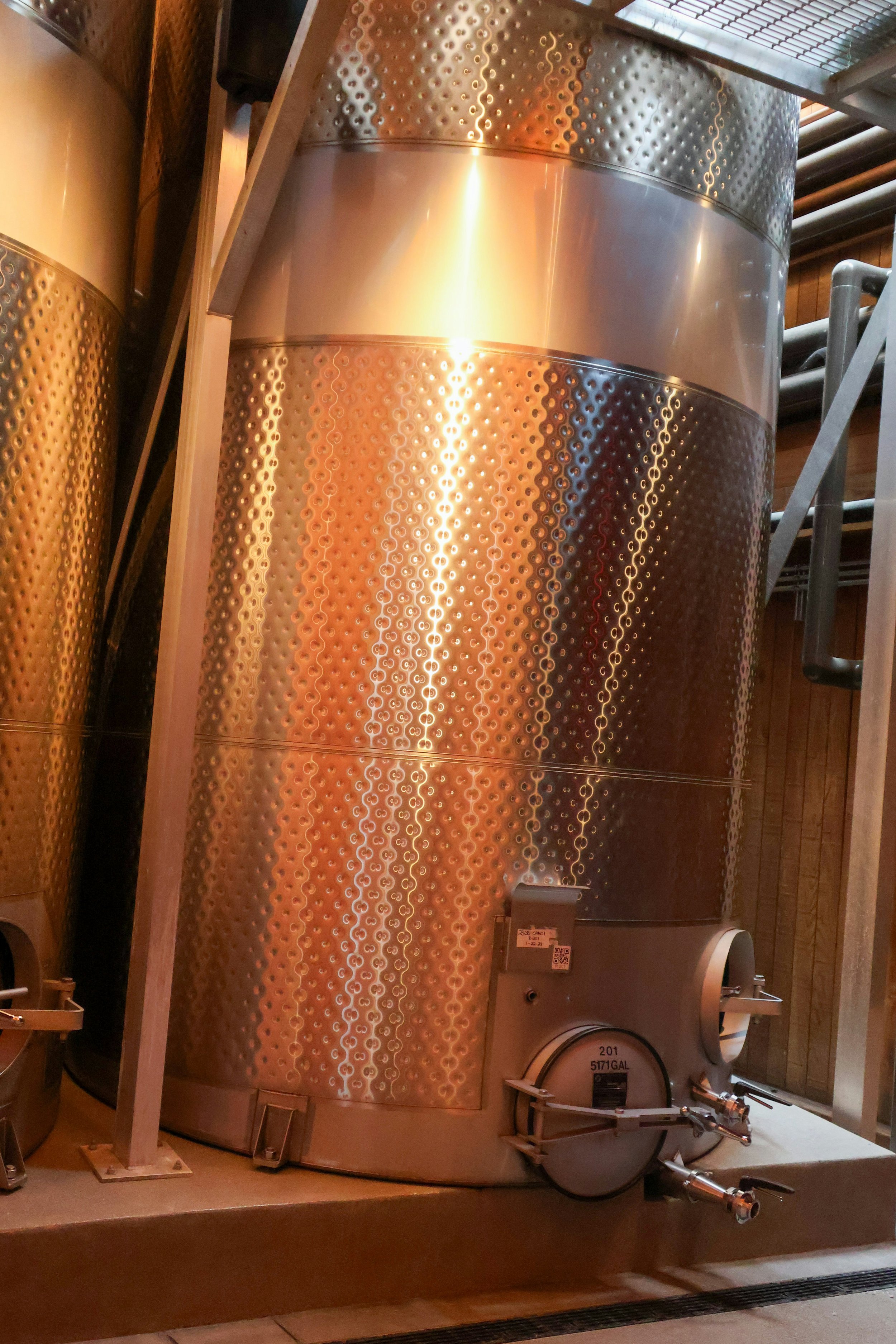
A large stainless steel tank used for fermentation Photo by Meg von Haartman on Unsplash
Another aspect of the art of wine making involves choosing the type of vessel used for fermentation. Fermentation vessels are available in several materials with each one allowing the wine maker to influence their wine’s flavor, texture, and overall style.
Here’s an quick overview of the main types for fermentation vessels and their pros and cons:
1. Stainless Steel Tanks
Stainless steel tanks are widely used in winemaking
- Pros:They are made of an inert material — it doesn’t impart any flavor to the wine
- These tanks are easy to clean and sanitize
It allows wine makers to conduct fermentation at highly controlled temperatures Cons:
While being a “pro,” the fact that it does not impart flavor can also be a negative
- Doesn’t allow for oxygen to interact with the fermenting wine, resulting in wines that can be sharper with harsher tannin
- Very costly Uses: Crisp whites like Sauvignon Blanc, rosés, and some lighter-bodied reds
2. Oak Barrels or Vats
Used for traditional or premium red wines and some white wines
- Pros:New oak can add significant flavors (vanilla, spice, toast)
The porous nature of oak allows “micro-oxygenation” that can soften tannin softening and add to a wine’s complexity Cons:
Harder to clean
- Oak barrels are expensive, especially new barrels Used for: Chardonnay and Fumé Blanc as well as for most red wines
3. Concrete Tanks or “Eggs”
Often used for artisan and natural winemaking
- Pros:Provides good temperature control during fermentation
- Allows for micro-oxygenation without imparting significant flavor
- Egg-shaped vessels promote convection currents — helps keep the lees in suspension
- Can enhance a wine’s texture and minerality Used for: Both reds and whites
4. Clay Amphorae (or Terracotta Jars)
This type of vessel has been used in wine making for thousands of years
- Pros:Allows for light oxygen exchange
Can retain the grape’s flavors and/or impart subtle earthy characteristics Cons:
These vessels are fragile and porous (some are lined with beeswax) Used for: Natural wines, often whites and light reds
So, the choice of fermentation vessel is indeed a factor in a wine maker’s artistic expression of their final product. Cheers!