Carignan 🍷
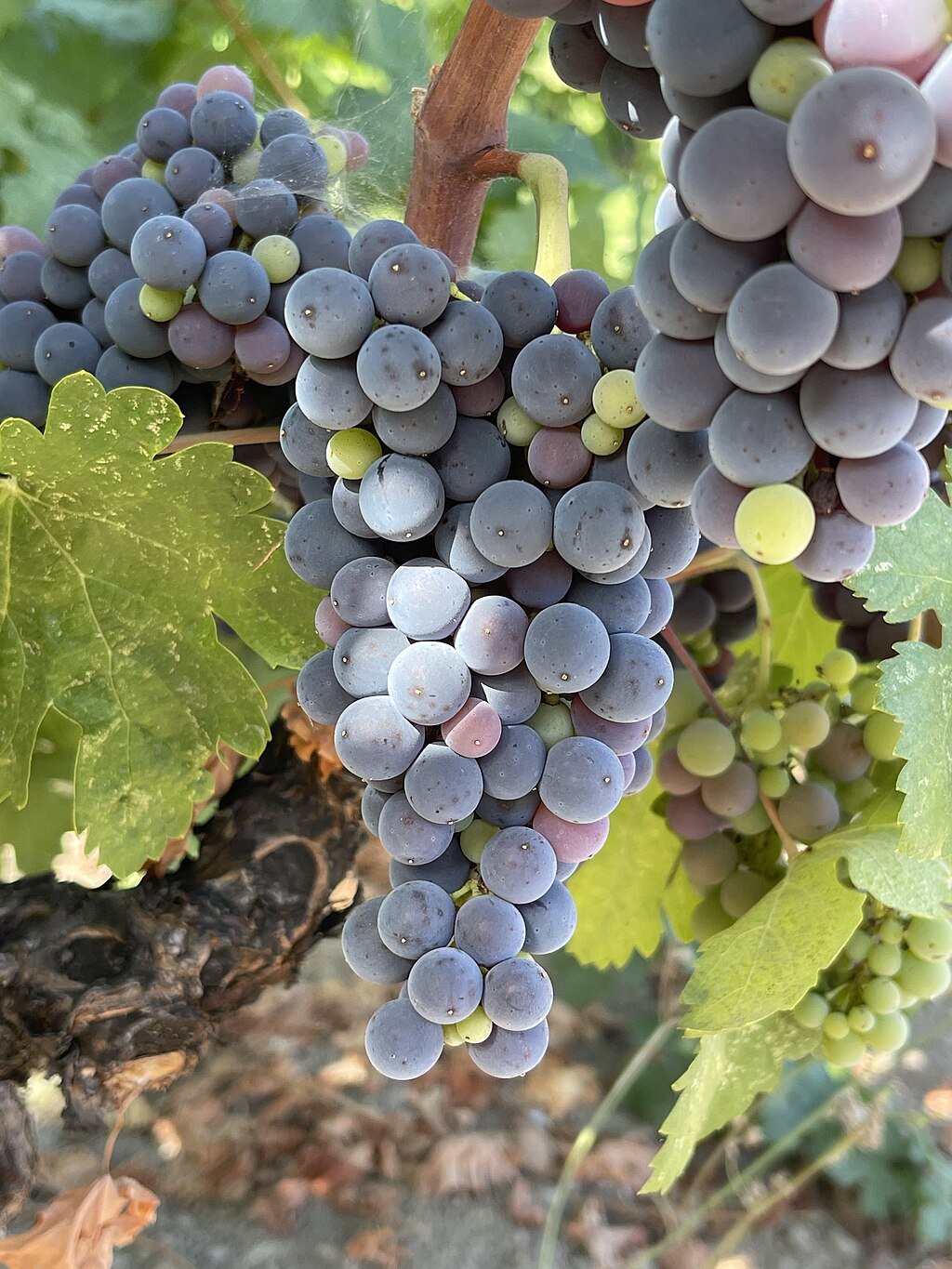
Carignan Grapes — Image from Wikimedia Commons (Sarah Stierch)
Carignan (care-in-yen), also known as Carineña or Mazuelo, is a black-skinned wine grape variety, most likely native to Aragon, Spain.
It is largely grown in France with smaller production in Spain, Italy and the U.S.
The vine of this grape is known for having exceptionally tough, woody stems. This makes mechanical harvesting nearly impossible because the grape clusters won’t easily detach from the vine. So, most high-quality Carignan is still being harvested by hand.
The Carignan grape is known for producing wines that are high in color, tannin and acid.
Carignan has moved from being used in mass-market “jug” wines in the U.S. to being recognized for its potential to produce nice medium-bodied wines.
Wines made from Carignan have tasting notes include cranberry, raspberry, and black fruit.
Because Carignan can have naturally high tannins, many winemakers use carbonic maceration—the same technique used for producing Beaujolais Nouveau. This process ferments the whole grape from the inside out, often giving the wine surprising aromas of bubblegum, banana, or cotton candy!
Carignan should be served in a red wine glass at 60-68 °F after decanting for 30 minutes.
It can be aged 5 to 10 years but is often best when served young.