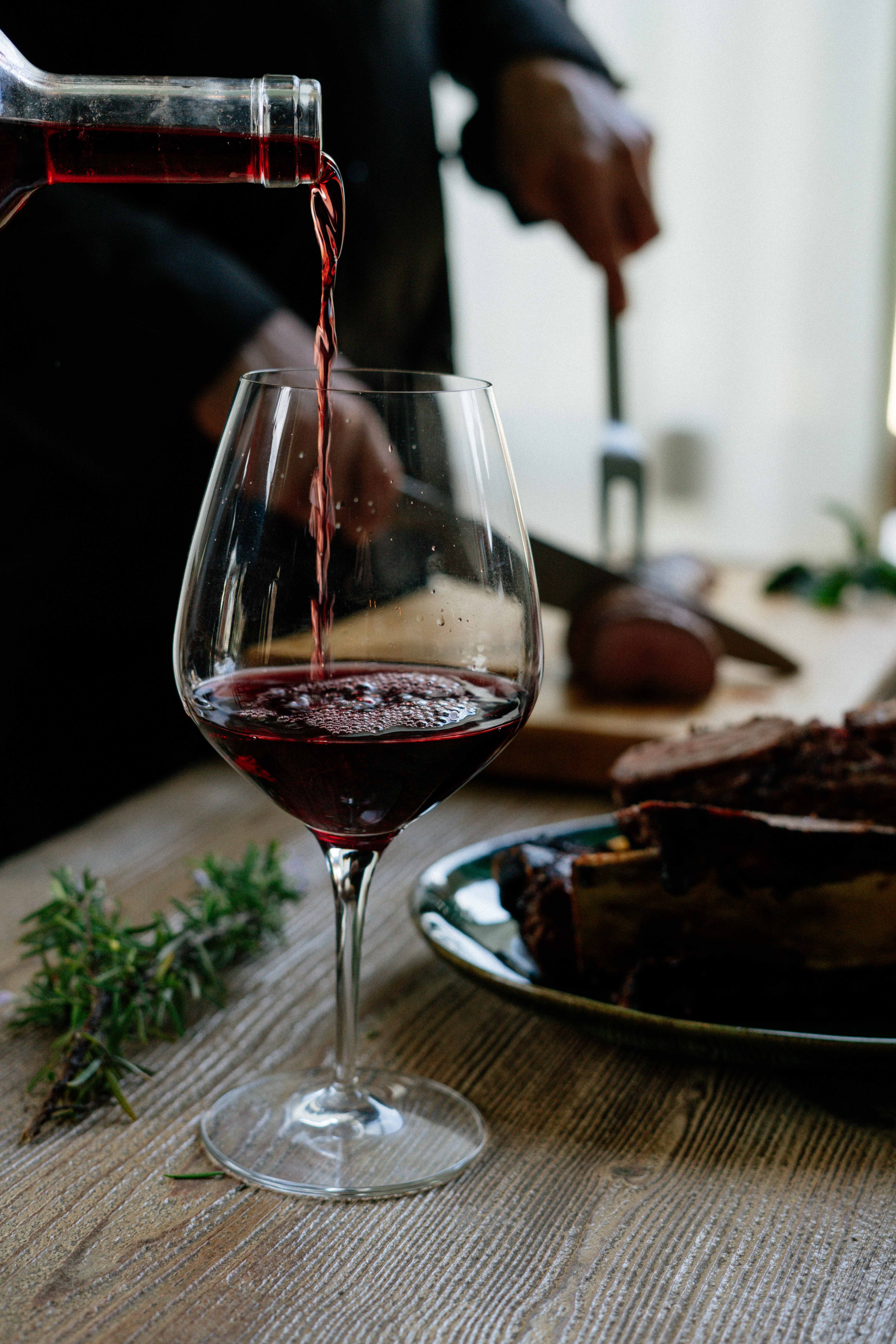
 Photo by Lefteris Kallergis on Unsplash
Amazingly, almost all grapes produce white juice. Red wines are produced by leaving the skin of the purple grapes in with the juice for some period of time as it ferments. This contact of the grape skin with the grape juice produces the color of the wine, ranging from light pink rosé to the deep red wines.
Full Bodied Red Wines
These are dark in color and have bold dark fruit flavors. These typically have stronger tannins from the seed, skins and oak aging, as well as higher alcohol levels. In general, darker grapes produce bolder wines with greater flavors.
Full bodied red wines include Aglianico, Cabernet Sauvignon, Malbec, Monastrell, Montepulciano, Nebbiolo, Nero d’Avola, Petite Sirah, Sagrantino, Syrah, Tannat, and Tempranillo.
Medium Bodied Red Wines
These wines sit between light and full bodied, with moderate tannins and fruit-forward flavors that make them among the most versatile and food-friendly reds.
Medium bodied red wines include Barbera, Cabernet Franc, Côtes du Rhône blends, Dolcetto, Grenache, Merlot, Super Tuscan blends, Valpolicella and Zinfandel.
Light Bodied Red Wines
These tend to be lighter in tannin, lower in alcohol and have bright acidity and fruit flavors.
Light bodied red wines include Cinsault, Gamay (used in the production of Beaujolais Nouveau) and Pinot Noir.
Red Wine Blends
Many of the world’s most celebrated wines are blends — the result of combining two or more grape varieties to achieve a complexity, balance, or consistency that no single grape can deliver on its own. Blending is both a science and an art, and winemakers have been doing it for centuries.
Meritage
Have you ever come across a wine labeled as Meritage and wondered what it is? It’s made in the U.S. where you can dependably know what a wine is because the label will tell you the grape varietal used to make the wine. But this U.S. made wine seems to fall into the category of many European wines; the label does not directly tell you the grapes used in the wine’s production.