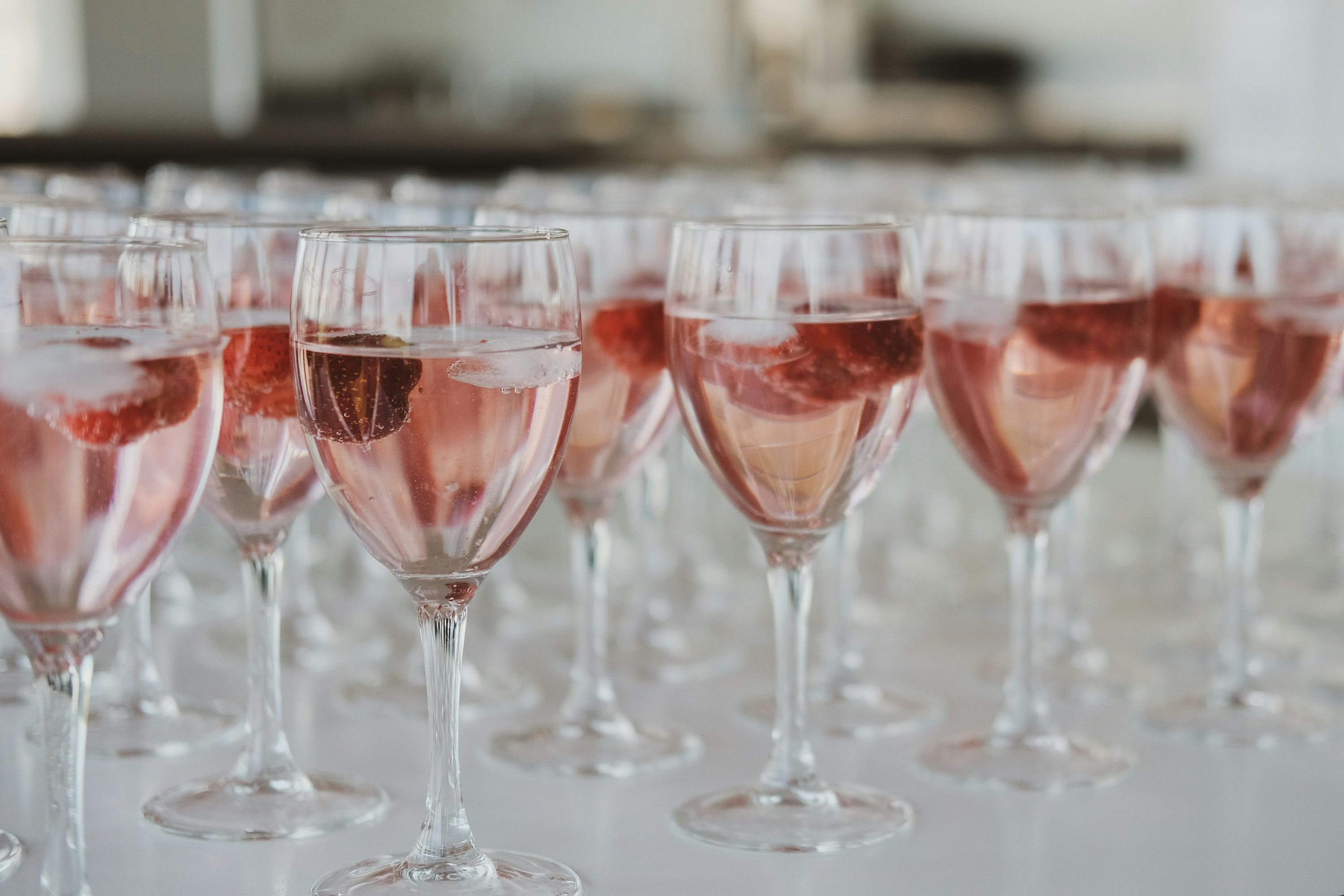
 Photo by Dennis Vinther on Unsplash
Rosé wines are a delicious middle ground between red and white — they’re made from red wine grapes, but the skins are left in contact with the juice for only a short time during fermentation. The longer the skin contact, the deeper the color, which is why rosés range from the palest copper-pink to a more vivid salmon or even light ruby.
Because of their limited skin contact, rosés tend to share many characteristics with white wines — they’re typically light, fruity, and higher in acidity — while still carrying some of the character of the red grape they were made from.
Rosé wines had gotten a bad rap, and some of it was deserved. The White Zinfandel that became so popular in years past has had a lot to do with rosé wines being greatly overlooked. And many times a rosé can be rather tasteless and weak. But rosés should not be rejected outright — there are many examples of rosés with great character.
Light rosés can have flavors of grapefruit, strawberry, and sweet cherry, while darker, bolder rosés can have flavors of black currant and blackberry. These flavors come from the many varieties of grapes used to produce rosé.
Fruity rosé can come from the Grenache, Sangiovese, and Zinfandel grapes, while savory rosé is made from Tempranillo, Syrah, and even Cabernet Sauvignon. Other rosés are made from Mourvèdre, Pinot Noir, Cinsault, and Clairette grapes. Check the label — nicer rosés will tell you the type of grape used in making the wine.
There are a couple of keys to finding dry versus sweet rosé, is the alcohol content and the other is where it was made. Sweeter wines, in general, have lower alcohol levels — not all the sugar was converted to alcohol during fermentation. All wine labels are required to show the percent alcohol of the wine. If it’s down around 8 or 9 percent, it’s going to be sweet. In the 11 to 12 percent range, it will be mid-range between sweet and dry. Above 12 percent, it’s going to be dry (meaning little to no residual sugar).
Typically, rosés from Old World countries are going to be drier. French rosés from Provence are made of Grenache, Cinsault, Syrah, and Mourvèdre. Spanish rosé — called rosado — is typically made from the Grenache grape, while Italian rosato is made with various grapes depending on the region. These are all excellent, dry rosés that are typically quite affordable. You should be able to find a nice rosé under $20.
Rosé wines go great with a large variety of foods and are typically served cool to cold.