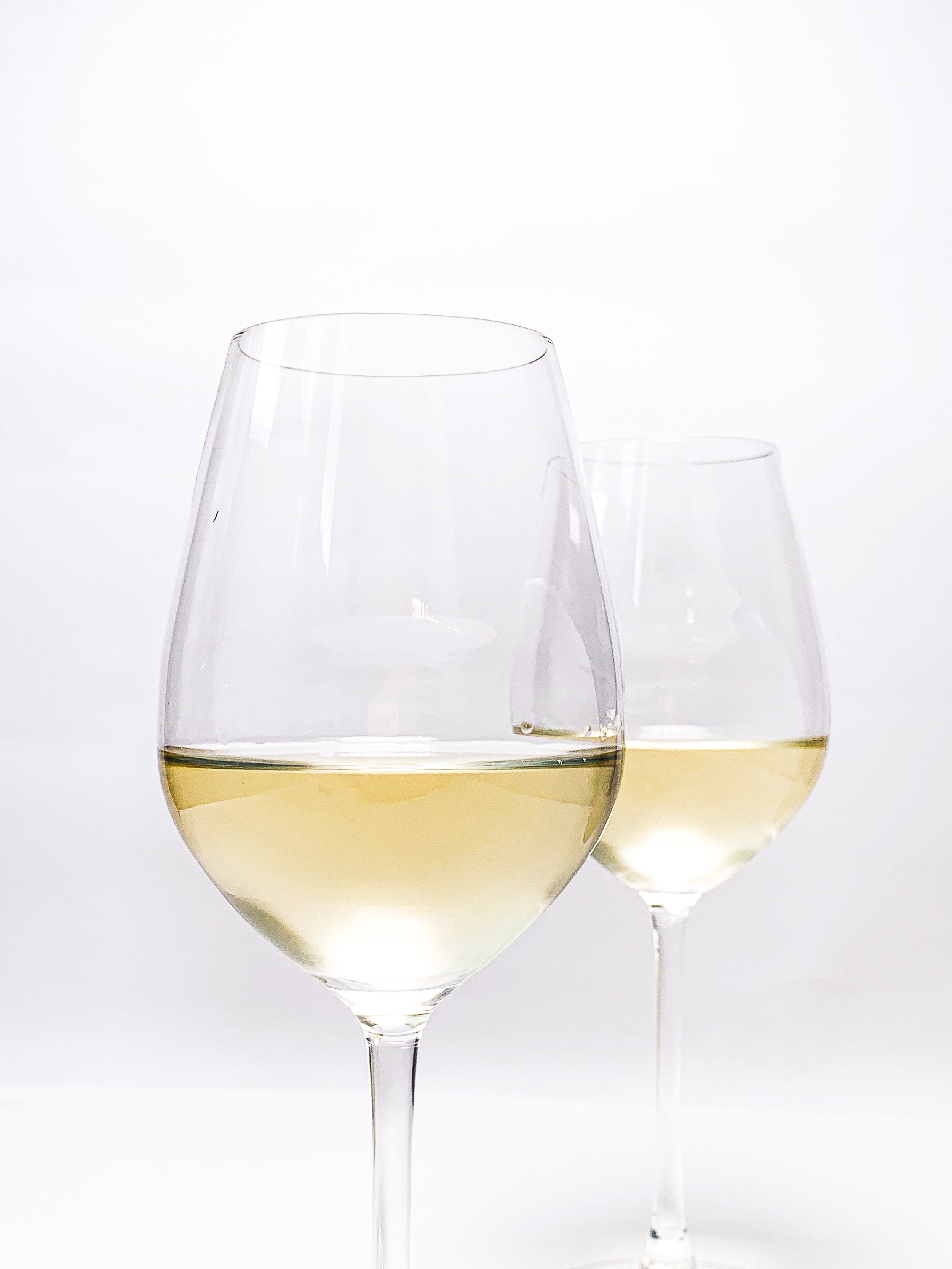
 Photo by Anastasiia Rozumna on Unsplash
White wines are generally made from green or yellow-skinned grapes, though a few varieties — such as Gewürztraminer and Pinot Gris — come from pink or lightly red-skinned grapes. Unlike red wines, white wines undergo little or no contact with the grape skins during fermentation, which is why they remain pale in color.
- Medium and Full Bodied White Wines
These wines have bigger, fuller flavors than the light bodied whites, contain a bit more alcohol, and are often aged in oak, which adds richness and complexity.
Medium bodied white wines include un-oaked Chardonnay, Gewürztraminer, Grüner Veltliner, Marsanne, Sémillon, and Viognier.
A full bodied white is best illustrated by an oaked Chardonnay — rich, creamy, and bold in flavor.
Fruity and Dry White Wines
These are fresh, bright, and high in acidity, with citrus, stone fruit, or floral notes depending on the grape.
Includes Albariño, Chablis (un-oaked Chardonnay from France), Pinot Gris/Grigio, Dry Riesling, Sauvignon Blanc (also known as Sancerre or Pouilly-Fumé), Verdicchio, Verdejo, and Vermentino.
Lightly Sweet White Wines
These have a touch of residual sugar that gives them a gentle sweetness, balanced by natural acidity.
Includes Chenin Blanc, Gewürztraminer, Müller-Thurgau, Muscat Blanc, Riesling, and Torrontés.
Sweet White Wines (also see Dessert Wines)
White wines with significant sweetness, typically from late-harvested grapes or naturally concentrated juice. Includes Ice Wine, Late Harvest wines, and White Port.
White Wine Blends
White wine blends are produced by combining two or more grape varieties to achieve a flavor, balance, or complexity that a single grape alone might not deliver on its own. Blending is also a practical tool for consistency — allowing winemakers to produce a wine that tastes the same from year to year even when individual vintages vary.
Winter White Wines
Winter white wines are not the bright, fruity, and refreshing styles you may normally associate with white wine — such as Sauvignon Blanc — but rather whites that are bigger and more powerful in flavor, designed to pair well with heartier winter dishes. These wines are also best served at a slightly warmer temperature than typical whites: 50–55°F rather than straight from the refrigerator.