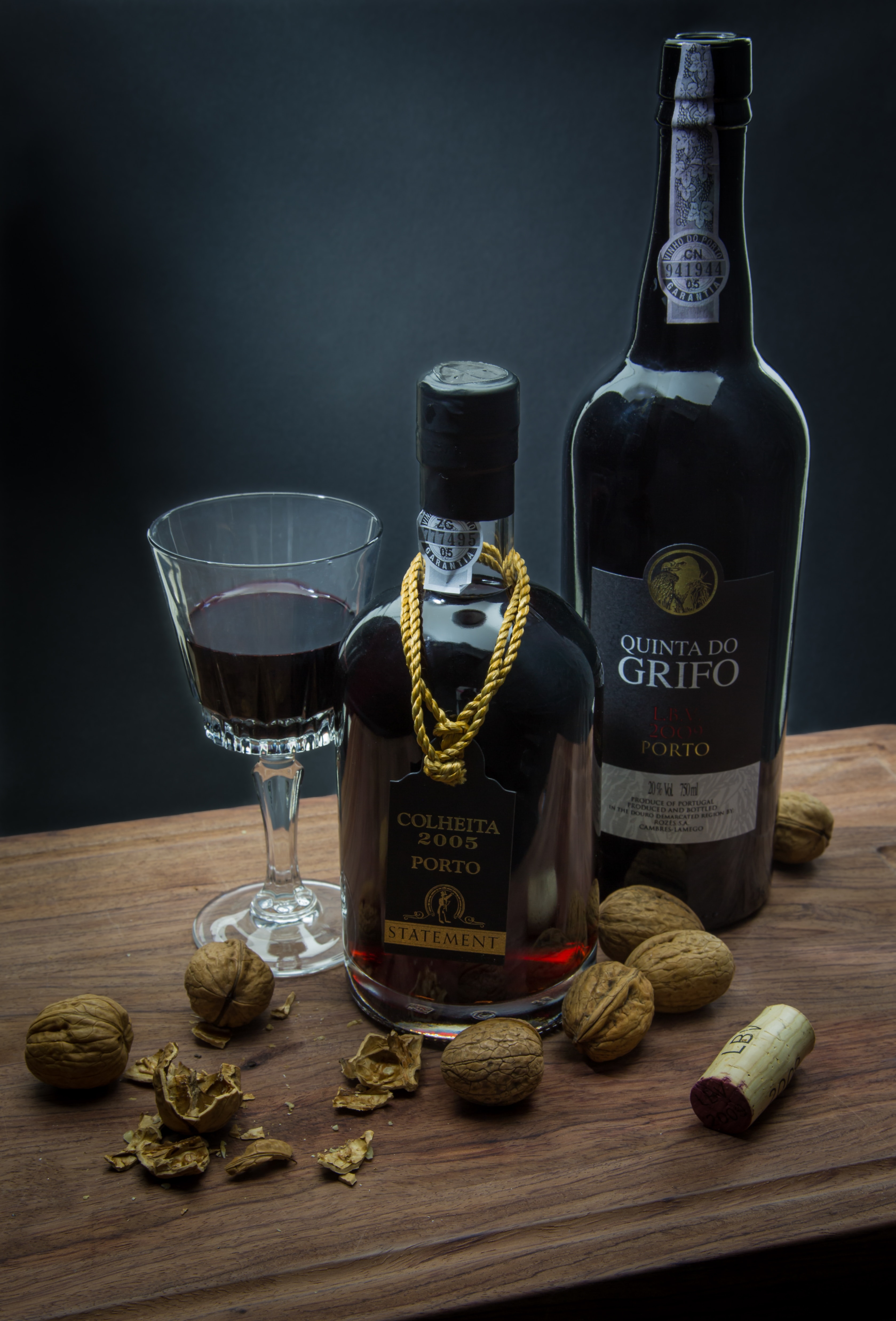
 Photo by Stefan Grage on Unsplash
Fortified wine is wine to which a distilled spirit — usually brandy — has been added. The practice originated in the days when wine was shipped long distances by sea, and it was discovered that the added alcohol acted as a preservative, keeping the wine fresher on long voyages. Today, fortification is a deliberate winemaking choice that produces some of the most complex and long-lived wines in the world.
Examples of fortified wines include:
Port — A rich, sweet red wine produced in the Douro Valley of Portugal. Fermentation is halted by the addition of brandy, which preserves the natural grape sugars and results in a wine that is both sweet and high in alcohol. Port ranges in style from the fruity and approachable Ruby Port to the nutty, aged complexity of Tawny Port.
Sherry — Produced exclusively in the Jerez region of southern Spain, Sherry ranges dramatically in style from bone dry (Fino, Manzanilla) to richly sweet (Pedro Ximénez). It is aged using the traditional solera system, in which younger wines are gradually blended with older ones to achieve consistency and complexity.
Marsala — A fortified wine from Sicily, Italy, available in dry and sweet styles. While it has a long history as a drinking wine, it is perhaps best known today as a cooking wine and as the key ingredient in the classic Italian dessert zabaglione.
Madeira — Produced on the rugged Portuguese island of the same name off the coast of Morocco, Madeira is made from four principal noble grapes — Malmsey, Bual, Verdelho, and Sercial — and fortified with brandy. Uniquely, it is then deliberately exposed to heat and oxygen during aging, a process that gives it extraordinary longevity and a flavor profile that ranges from bone dry to intensely sweet.
Vermouth — A fortified wine flavored with an array of botanicals, herbs, spices, and sometimes fruits. Available in dry and sweet styles, Vermouth is widely used as an aperitif and as an essential ingredient in classic cocktails such as the Martini and the Negroni.