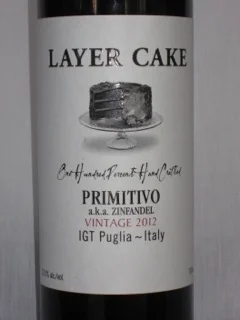
It’s always fun to find and try new and different wines. And, when it comes to exploring “Old World Wines” it can be even more of an adventure. That’s what happened to me when studying the shelves of Italian wines. I came across a completely unknown ...
A few years back as I started to become interested in wines, I was searching for a really great wine that I could dependably go back to time after time. While the search for a great wine was a fun adventure, it never seemed to converge on a wine that...
Last time we explored the Right Bank of Bordeaux with its Merlot-based red blends, primarily from the appellations of Saint Émilion, Pomerol and Fronsac. Next, its over to the Left Bank.
Located west of the Gironde and Garonne Rivers, the Left Bank ...
Bordeaux is one of the greatest wine producing regions in the world. It is divided into two distinct regions referred to as the “Right Bank” and “Left Bank” depending on which side of the Dordogne River it is located. Different dominant grapes used ...
Nothing about French wine seems to be straightforward or simple. But once you get to know the various wine regions of France it becomes a bit clearer.
In the past couple of postings I’ve touched on the French wine region of Burgundy. I discussed th...
Previously I covered the most widely known white Burgundy (Bourgogne Blanc) from Chablis. We learned that wines from Chablis are produced from the Chardonnay grape.
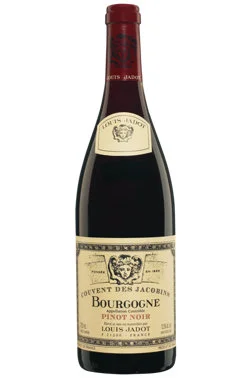
The other most notable wines from Burgundy are red wines (Bourgogne Rouge). And, the...
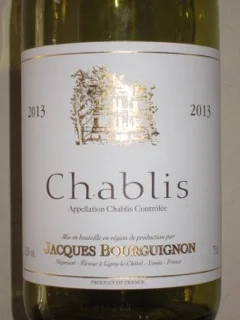
There was a time when ordering a glass of Chablis meant that you wanted a glass of white wine. No specific wine, just a white wine. But there is so much more to Chablis than just a white wine.
Chablis is a region located in the northwest corner of t...
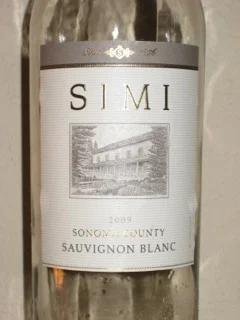
The Sauvignon Blanc grape is one of the most widely planted wine grapes in the world. While the Sauvignon Blanc grape is most famously associated with the France’s Loire Valley regions of Sancerre and Pouilly-Fumé, it most likely originated in Borde...
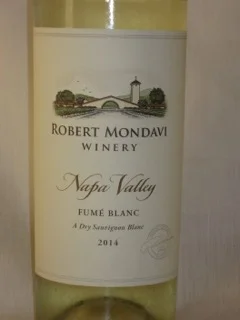
I was recently asked about Fumé Blanc. And, as you might guess, it’s made from the Fumé Blanc grape. Except, you’d be wrong. Just like I was. Fumé Blanc wine is produced from the Sauvignon Blanc grape.
It was back in 1966 that wine maker Robert Mo...
When it comes to a wine’s ability to be aged, both tannin and acidity play a role. Tannins were described last time as having compounds that act as natural preservatives in wine. The natural acids in the juice of the grape also help to preserve a wi...
 behind the cork